Applications
• Preparation of substrates before theming with the ESTonetex System
• Facades, building works and restorations, especially of historic heritage
• Cleaning of damage from damp, saltpetre (hygroscopic salts), micro-organisms, mould and algae
• Cleaning prior to impregnations, primers, consolidants, water repellents, paints and anti-graffiti protections
• Food industry and industry in general
Technical specifications
| Reference | 1402 (1 L) / 1403 (5 L) / 1404 (10 L) |
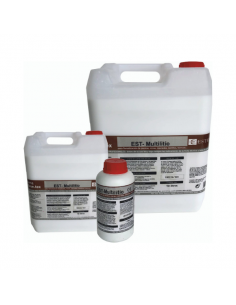
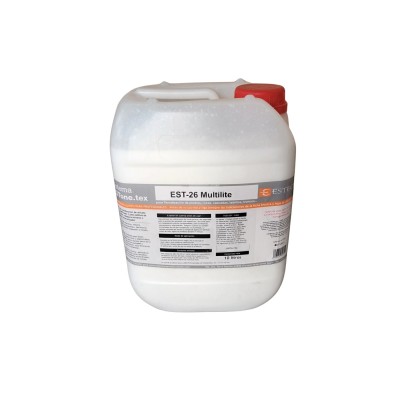
| Packaging | 1 L, 5 L or 10 L plastic container |
| pH | Approx. 2.2 |
| Density | Approx. 1.02 |
| Dilution | From neat to 1:4 in water as a general rule |
| Yield | Stone 8-10 m²/L; mortars, concrete, paints and bricks 10-15 m²/L; wood 4 m²/L |
| Shelf life | 24 months in a sealed container, in a cool place (5 to 25 ºC) |
Water-based cleaning concentrate with a wide range of applications and a remarkable descaling power: it leaves the pores of the base clean, open and receptive to later treatments. Its surfactants neutralise the base after rinsing with water. Full technical documentation is in the technical data sheet downloadable above.
How is it applied?
• Protect with plastic sheeting any sensitive surfaces that should not be treated, as well as gardens
• Apply to the affected surface with brushes, a sprayer, etc.
• Focus on areas where a reaction appears and scrub the affected area with brushes
• Rinse with water before the product and the dissolved dirt dry (normally after 5-10 minutes)
• Allow to dry before other treatments
• The process can be repeated several times until the desired cleaning is achieved
It can be used from neat to diluted, generally 1:4 in water, according to the needs and condition of each surface: the higher the concentration, the faster it acts and the greater its capacity to dissolve salts.
Substrates
Bases resistant to weak acid solutions, such as unpolished mineral bases, natural and artificial stone, concrete, mortars, wood, painted surfaces, stainless steel, ceramics, refractory materials, etc. For greater effectiveness the surface should be dry. The shine of surfaces such as polished marble, glossy paints, polished stone and acid-sensitive metal alloys may be affected and dulled: we recommend protecting them.
Compatibility
• Restoration mortars: on natural stone or damp substrates, clean first with EST-12 and then apply the consolidant and the mortar, such as ESTonetex Restaura
• Consolidants and water repellents: cleaning with EST-12 is recommended before impregnations, consolidants and water repellents, such as EST-Multilitio or EST-3 Plus
• Application: with a brush, scrubbing brush or EST sprayer, depending on the surface
Observations and precautions
Occasionally saltpetre may reappear after the first cleaning has dried: this second efflorescence will need a second cleaning and rinse. Wear gloves, goggles and a mask; do not ingest or inhale. Professional product: always consult the safety data sheet before use.
Storage
Store for up to 24 months in a sealed container, in a cool place at a temperature not below 5 ºC nor above 25 ºC. Expired product must be disposed of in accordance with current legislation; only completely empty containers are recycled and leftover liquid must be handled by a specialised waste manager.
Complementary materials
• ESTonetex Restaura: restoration mortar for natural stone, brick and renders
• EST-Multilitio and EST-3 Plus: consolidant and water repellent applied to the cleaned base
• EST sprayer: to apply the cleaner on large surfaces
Frequently asked questions
What is EST-12 used for?
To clean damage caused by damp: saltpetre (hygroscopic salts), mould, algae, micro-organisms and dirt from environmental pollution, on facades, restorations and substrate preparation.
How is it diluted?
From neat to diluted; as a general rule 1:4 in water, depending on the dirt and the surface. The higher the concentration, the faster it acts and the more salts it dissolves.
When should it be rinsed?
With water and before the product and the dissolved dirt dry, normally after 5-10 minutes, having first scrubbed the affected area with a brush. Then allow to dry before other treatments.
Which surfaces can it be used on and which should be protected?
On bases resistant to weak acid solutions: natural and artificial stone, brick, concrete, mortars, wood, ceramics, stainless steel or painted surfaces. Protect polished marble, glossy paints, polished stone and acid-sensitive metals.
Can the saltpetre come back?
Sometimes, yes, after the first cleaning dries. That second salt efflorescence is treated with a second cleaning and rinse.
What is its yield?
Depending on the material: stone 8-10 m² per litre; mortars, concrete, paints and bricks 10-15 m² per litre; wood 4 m² per litre.
Which containers and references does it come in?
In plastic containers of 1 L (REF 1402), 5 L (REF 1403) and 10 L (REF 1404).
Can it be applied before consolidants, water repellents or paints?
Yes, in fact it is recommended to clean walls, floors, ceilings and surfaces with it before impregnations, primers, consolidants, water repellents, paints or anti-graffiti protections, and let them dry.
How does it differ from EST-Desmoldeante or EST-S Imprimer?
EST-12 cleans the substrate before it is treated. EST-Desmoldeante is a release agent for moulds and rollers and EST-S Imprimer is a bonding primer for mortars on smooth substrates: they are used at other stages of the job.