


Previous
Next
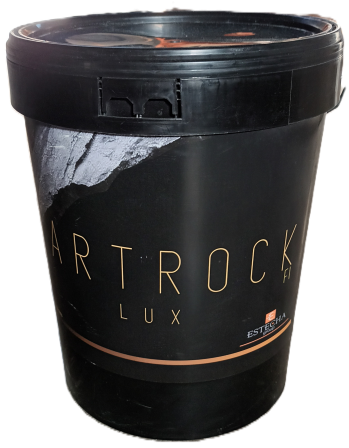
ESTonetex Art Rock GR
Applications
• Artificial rock, stone, figures, tree trunks, landscapes and theming reliefs, through moulding and subsequent stamping or hand carving
• Ornamental elements on facades: plinths, skirting boards and ashlar blocks
• Vertical walls, partitions and ceilings, indoors and outdoors
• Hotel, resort, zoo and leisure-space projects
• High-end, luxury decorative work with a black finish
Technical specifications
| Packaging | 25 kg plastic bucket. Pallet of 27 buckets (675 kg) |
| Reference | 1010 |
| Colour | Black |
| Application thickness | 10 to 60 mm in a single layer. For thicknesses above 60 mm, several layers reinforced with EST-Mesh 80 g/m² |
| Mixing water | 5 to 6 L per 25 kg bucket |
| Yield | Approx. 14 kg/m² at 10 mm thickness (at 20 °C and 60 ± 5 % R.H.) |
| Grain size | < 1.5 mm |
| Powder specific weight | 1,350 ± 50 kg/m³ |
| Hardened mortar density | Approx. 1,600 kg/m³ (EN 1015-10) |
| Shrinkage | < 1.2 mm/m |
| Compressive strength | Class CSIV at 28 days (EN 1015-11) |
| Vapour diffusion resistance factor (μ) | < 13 (EN 1015-19) |
| Capillary water absorption | W2 (EN 1015-18) |
| Reaction to fire | Euroclass A1 |
| Classification | Plastering mortar GP CSIV W2 (EN 998-1), CE marked |
| Application temperature | Between 5 °C and 35 °C |
| Shelf life | Up to 12 months from the manufacturing date, in the original packaging, under cover and in a dry place |
Data verified in the official technical data sheet. Full technical documentation and certificates are available on request through the contact form.
Supports
The substrate must be free of dust, dirt, salt efflorescence, oil and grease. Concrete and very smooth surfaces must be dry and previously treated with a material that improves adhesion and grip, such as ESTonetex Forte. Crack-free results are not guaranteed on special substrates: consult Estecha or the Surface Guide before applying.
How is ESTonetex Art Rock GR mixed?
Mix with 5 to 6 litres of clean water per 25 kg bucket, in a mixer, by hand or with an electric mixer, until a homogeneous, lump-free, workable paste is obtained. If the application is mechanical (the recommended method), once the hose section and length have been chosen, the optimal water/mortar ratio is adjusted by trial and error until a homogeneous, lump-free, workable paste is obtained.
How is it applied?
Apply in a single layer with a minimum thickness of 10 mm and a maximum of 60 mm, by spray gun or by hand. For thicknesses above 60 mm, apply the product in several layers and reinforce with EST-Mesh 80 g/m². The surface treatment is carried out between 4 and 12 hours after application, depending on ambient conditions, the thickness applied and the type of surface.
Observations and precautions
Protect the fresh mortar from frost and rapid setting; apply between 5 °C and 35 °C. Indoors, ventilate until completely dry, avoiding sharp temperature swings; application in strong wind can cause cracking. If colouring, use material from the same manufacturing date for the whole job. Contains cement: wear gloves, goggles and a mask. Professional product: always consult the safety data sheet.
Pigmentation
Once the mortar has dried, it can be pigmented with EST-26 Multilite, EST-Monocrom or EST-Multipol. When the work is finished, the mineral water repellent EST-3 Plus is applied for added protection.
Complementary materials
• EST-Mesh 80 g/m²: reinforcement for thicknesses above 60 mm
• ESTonetex Forte: pre-treatment of concrete and very smooth surfaces to improve adhesion
• EST-26 Multilite / EST-Monocrom / EST-Multipol: pigmentation of the finish once dry
• EST-3 Plus: mineral water repellent to protect the finish
Frequently asked questions
What is ESTonetex Art Rock GR mortar used for?
For decorative theming work: imitation of rocks, stone, tree trunks, figures, landscapes and reliefs through moulding and subsequent stamping or hand carving, and for ornamental facade elements (plinths, skirting boards, ashlar blocks). It can be used indoors and outdoors, and its finish is black.
What is the difference between Art Rock GR and Art Rock FI?
Both are black mortars in the Art Rock line, but for different jobs. Art Rock GR is applied in a single layer of 10 to 60 mm, with a yield of about 14 kg/m² at 10 mm, to build volume and to carve or stamp reliefs. Art Rock FI is a thin-layer mortar applied directly onto EPS/XPS at 2 to 10 mm (up to 15 mm for volumes), with 7.25 to 8.25 litres of water per bucket.
How does it differ from TXT and Park mortars?
All three are mouldable theming mortars, but they differ in colour, thickness and packaging. Art Rock GR comes in black, in a 25 kg plastic bucket, with 10 to 60 mm in a single layer and a shelf life of up to 12 months. TXT is supplied in 25 kg paper bags, in sandstone, white, grey or custom colour on request, with 10 to 70 mm per layer and up to 20 cm in total. Park comes in a 25 kg bag, in white, grey or sandstone, with 10 to 50 mm per layer.
What thickness does ESTonetex Art Rock GR mortar allow?
From 10 to 60 mm in a single layer. Above 60 mm it is applied in several layers, reinforced with EST-Mesh 80 g/m².
How much Art Rock GR mortar is needed per m²?
Approximately 14 kg/m² at 10 mm thickness, according to the technical data sheet (at 20 °C and 60 ± 5 % relative humidity). A 25 kg bucket therefore covers about 1.8 m² at 10 mm; the greater the thickness, the higher the consumption.
How much water does it need and can it be machine-applied?
It is mixed with 5 to 6 litres of clean water per 25 kg bucket, in a mixer, by hand or with an electric mixer. The technical data sheet recommends mechanical application: the hose section and length are chosen and the water/mortar ratio is adjusted by trial and error. It can also be applied by hand.
How long is there to carve or stamp the mortar?
The technical data sheet states that the surface treatment is carried out between 4 and 12 hours after application, depending on ambient conditions, the thickness applied and the type of surface. It does not give a pot life for the mix.
What temperature can it be applied at?
Between 5 °C and 35 °C. Fresh mortar must be protected from frost and rapid setting, and application in strong wind can cause cracking.
Is it resistant to water and fire?
It contains a large amount of water-repellent material and has a capillary water absorption coefficient of W2 (EN 1015-18). Its reaction to fire is Euroclass A1 and its vapour diffusion resistance factor is μ < 13.
Can it be applied on concrete or smooth surfaces?
Yes, but concrete and very smooth surfaces must be dry and previously treated with a material that improves adhesion, such as ESTonetex Forte.
👉🏻 Remember that our shop is a DIGITAL CATALOGUE. You can request a quote if you are in Spain, or find our official international distributors.
Solicitud de presupuesto
-- or --