Applications
• Surfaces immersed in fresh or salt water: aquariums, submerged rockwork and ponds
• Professional theming in zoos, aquariums and theme parks with heavy wear
• Surfaces subject to high mechanical wear
• Harsh climates or environmental conditions that make it difficult for a standard CSIV mortar to cure and reach its optimum hardness
• Creation of horizontal and vertical volumes: artificial rock, stone, wood or tree trunks, by moulding and spraying
• Fountains, spas, saunas and pools with submerged areas
• Critical volumetric reconstruction in restoration and heritage
Technical specifications
| Packaging |
25 kg paper bag. Pallet of 48 bags (1,200 kg) |
| Reference |
1004 |
| Colour |
Sandstone |
| Application thickness |
20 to 60 mm per coat; total of 2 to 20 cm in several coats |
| Additive |
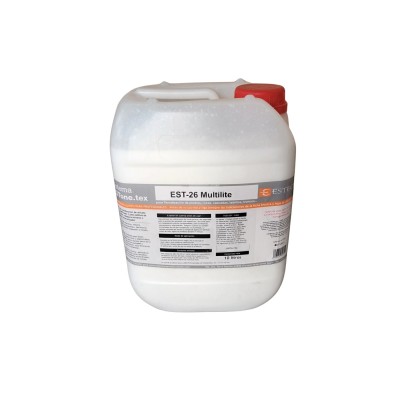
EST-26 Multilite dissolved in water: 1 litre per 5 litres of water. Do not mix with other products |
| Solution per 25 kg bag |
By hand (applications over 2 cm): 4.2 to 4.5 L. With spraying machine: 4.8 to 5 L |
| EST-26 Multilite consumption |
On average, 800 to 1,000 ml per 25 kg bag, depending on application method and thickness |
| Mortar consumption |
18 to 20 kg/m² per cm of thickness |
| Fresh bulk density |
1.887 g/cm³ |
| Consistency |
155 mm |
| Entrained air |
14 % |
| Grain size |
0.1 and 0.2 mm |
| Application temperature |
Between 5 °C and 30 °C (max. relative humidity 80 %) |
| Working time |
After troweling, wait 1 to 2 hours (sometimes 4 to 6) to theme, shape, carve and scrape; then let it dry for 24 to 48 hours for the final effects and finishes |
| Compressive strength |
24.17 N/mm² at 28 days (the standard requires 6 N/mm²) |
| Flexural strength |
6.08 N/mm² at 28 days |
| Classification |
GP CSIV W2 (EN 998-1), CE marked |
| Reaction to fire |
Euroclass A |
| Shelf life |
24 months from the manufacturing date, in the original packaging, under cover and in a dry place |
Data verified in the official technical data sheet. Full technical documentation and certificates are available on request through the contact form.
Supports
Clean surfaces, free of dust, release agents, paint or any other substance that could affect adhesion; the substrate must be sound, with any shrinkage or settlement cracks already stabilised. It is applied directly on 82 g/m² fibreglass mesh structures, plastic mesh or expanded metal lath, and on brick, hollow clay block and concrete. Priming with EST-26 Multilite is recommended: it acts as a bonding bridge and regulates the absorption of the substrate; allow 24 hours to dry before applying the mortar. For difficult-to-bond substrates, consult the Surface Guide.
How is ESTonetex Extreme mixed?
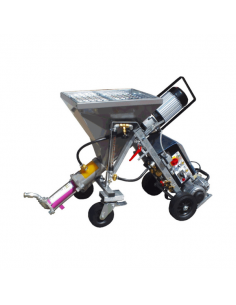
First prepare the solution: 1 litre of EST-26 Multilite per 5 litres of water. Mix each 25 kg bag with 4.2 to 4.5 litres of solution for hand application (thicknesses over 2 cm) or with 4.8 to 5 litres for spraying machines, until a homogeneous, lump-free paste is obtained. When spraying, adjust the amount of solution until the right spraying viscosity is reached. Once homogenised, apply immediately. Do not mix with other products: only with EST-26 Multilite dissolved in water.
How is it applied?
By hand: first spread a very thin coat over the substrate, pressing to release the air, and build up immediately in coats of 20 to 60 mm to the desired thickness (up to 20 cm in total in several coats). With a machine: spray up to the desired thickness using the right technique for high thicknesses. 82 g/m² fibreglass mesh is recommended. After troweling, wait 1 to 2 hours (sometimes 4 to 6, depending on temperature and humidity) to theme, shape, carve and scrape; then let it dry for 24 to 48 hours, during which the final effects can be applied and the finishing can begin. Clean tools, machine and hoses with water straight after use, before the mortar sets. You can watch the application tutorial.
Observations and precautions
Do not apply below 5 °C or with risk of rain or frost. In hot weather, dampen the base thoroughly, avoid prolonged exposure to the sun and monitor drying times. Ideal curing conditions are 20 °C and 60 % relative humidity: with more cold and humidity, drying and curing take longer. Contains cement: wear gloves, goggles and a mask. Professional product: always consult the safety data sheet.
Pigmentation
Once dry, it can be pigmented with EST-26 Multilite, EST-Monocrom or EST-Multipol, and protected on completion with the EST-3 Plus mineral water repellent. It also accepts EST-Decor powder patinas.
Complementary materials
• EST-26 Multilite: mandatory additive (1 litre per 5 litres of water) and recommended primer for the substrate
• 82 g/m² fibreglass mesh: mesh recommended by the technical data sheet
• EST-26 Multilite / EST-Monocrom / EST-Multipol: pigmentation of the finish once dry
• EST-3 Plus: mineral water repellent for final protection
Frequently asked questions
What is ESTonetex Extreme mortar used for?
For theming aquariums, zoos and surfaces that will be immersed in fresh or salt water, and for areas of heavy mechanical wear or harsh climates where a standard CSIV mortar does not cure properly. It can be applied from 20 to 60 mm in a single coat and allows you to create rock, stone, wood or tree trunks.
What is the difference between ESTonetex Extreme and ESTonetex Sulfo?
ESTonetex Extreme is designed for surfaces immersed in fresh or salt water (aquariums, submerged rockwork, ponds) and is always mixed with EST-26 Multilite. ESTonetex Sulfo is a sulphate-resistant mortar for continuous contact with salt or chlorinated water without total immersion (pools, showers, waterfalls), in thicknesses of 1 to 20 cm. For total immersion, the right product in the ESTonetex System is Extreme.
And the difference from ESTonetex Extreme SR-MR?
ESTonetex Extreme SR-MR is the sulphate-resistant version of Extreme, more resistant to seawater, with applications of 1 to 15 cm in a single coat when enriched with EST-26 Multilite, and it can also be mixed with water only. Extreme is always mixed with EST-26 Multilite and takes 20 to 60 mm per coat.
Can I use ESTonetex TXT or Park in an aquarium?
TXT and Park are designed for rock, figures, facades, theme parks and zoos out of the water. For continuously submerged surfaces, the right mortar is ESTonetex Extreme.
Is the EST-26 Multilite additive mandatory?
Yes. ESTonetex Extreme is always mixed with a solution of EST-26 Multilite in water (1 litre per 5 litres of water) and must not be mixed with any other product. On average, 800 to 1,000 ml of EST-26 Multilite are needed per 25 kg bag.
How much ESTonetex Extreme mortar is needed per m²?
18 to 20 kg/m² per centimetre of thickness, according to the technical data sheet. A 25 kg bag therefore covers between 1.25 and 1.4 m² at 1 cm thickness, and between 0.6 and 0.7 m² at 2 cm.
How long does ESTonetex Extreme last once mixed?
The technical data sheet does not set a pot life: it says to apply the mix immediately once homogenised and to clean tools, machine and hoses with water before the mortar sets. Mix only the amount you are going to apply.
What temperature can ESTonetex Extreme be applied at?
Between 5 °C and 30 °C, with maximum relative humidity of 80 %. Do not apply with risk of rain or frost and, in hot weather, dampen the base thoroughly and monitor drying times.
What mechanical strength does ESTonetex Extreme have?
24.17 N/mm² in compression and 6.08 N/mm² in flexure at 28 days, against the 6 N/mm² required by EN 998-1 for a CSIV mortar. It is a GP CSIV W2 mortar with CE marking and Euroclass A reaction to fire.
Can it be applied with a spraying machine?
Yes, by hand or with a spraying machine. For spraying, mix with 4.8 to 5 litres of solution per 25 kg bag and adjust the amount until the right spraying viscosity is reached.